Standing seam metal roof installed at Elk Ridge Estates, Saskatchewan

Comparison Guide

Standing seam vs exposed fastener: which metal roof is right for your building?

An honest side-by-side from the crew that rolls and installs both profiles across Saskatchewan — cost, lifespan, leak risk, and the situations where each one is the correct call. Every photo below is our own work. No stock photography.

The short answer

Choose standing seam

For houses, cabins, low-slope or complex roofs, solar-ready builds, and any building where a service call is expensive. Concealed clips, no exposed washers, 50+ year life.

Choose exposed fastener

For shops, barns, bins and simple-gable utility buildings on a fixed budget. Lower cost per square foot, faster install, and perfectly serviceable with one screw maintenance pass mid-life.

Head to head

Saskatchewan pricing and real-world numbers from our own installs, not manufacturer marketing figures.

Comparison of standing seam and exposed-fastener metal roofing on cost, fasteners, service life, thermal movement, minimum slope and appearance
FactorStanding seamExposed fastener
Installed cost$12–$18 / sq ft — more material, clips and labour per square.$7–$11 / sq ft — fastest, lowest-cost way to get steel over a building.
FastenersConcealed clips under the seam. Nothing penetrates the panel face.Screws with neoprene washers through the panel face, roughly every 12–24".
Service life50+ years. Paint system usually gives out before the assembly does.25–40 years, but washers dry out and screws need re-torquing at 10–15 years.
Thermal movementFloating clips let long panels expand and contract — critical on prairie temperature swings.Panels are pinned. Movement works the screw holes and slowly enlarges them.
Minimum slopeWorks down to low-slope (as low as 1:12 with the right seam profile).3:12 and steeper is safe territory; below that, leak risk climbs fast.
LookClean vertical ribs, no visible hardware — the finish most homeowners want on a house.Ribbed, utilitarian profile that reads correctly on shops, barns and outbuildings.

See both profiles on real Saskatchewan buildings

Every image here is a job we rolled and installed ourselves.

Standing seam — residential and estate work

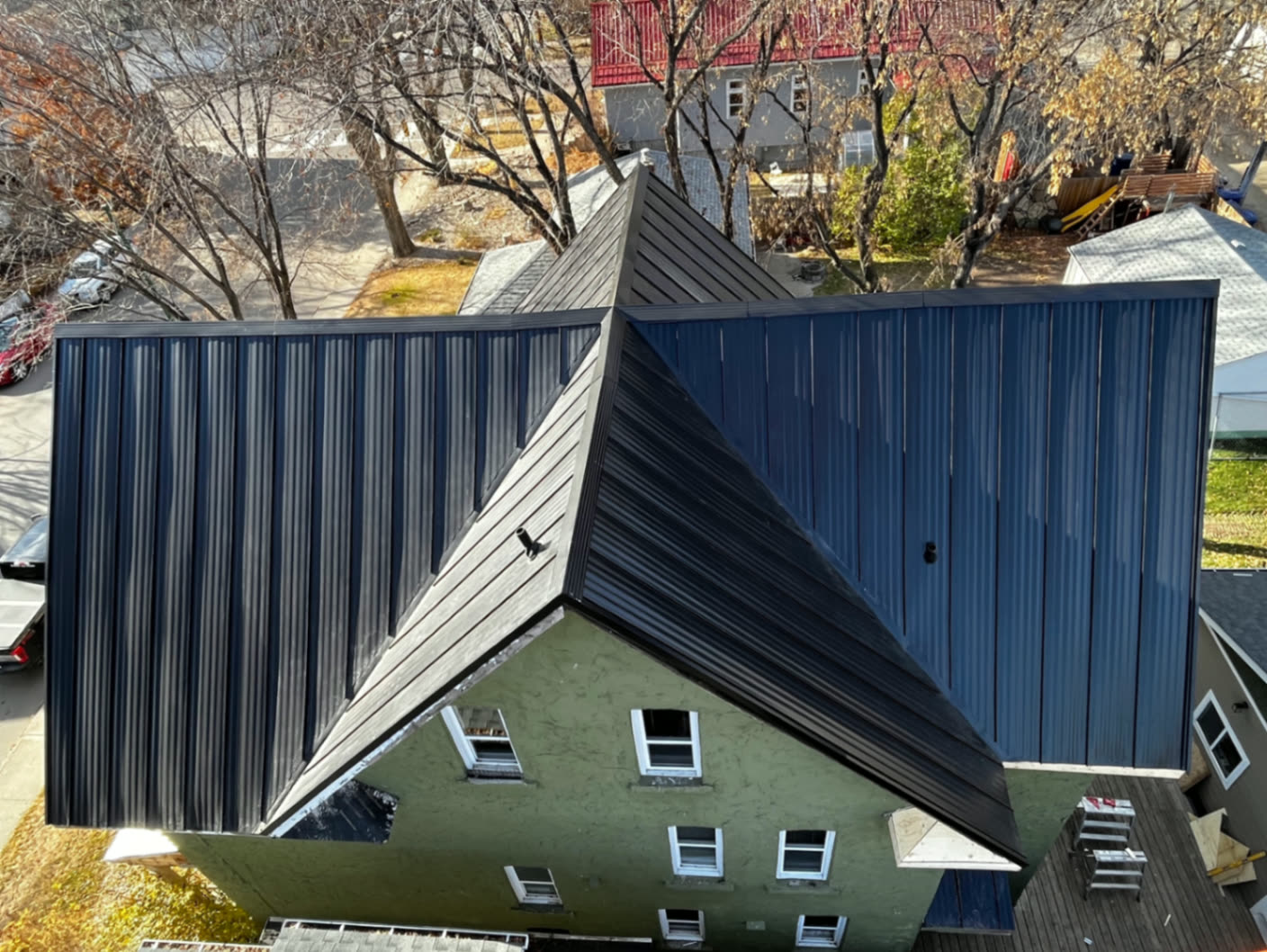
Aerial view — black standing seam metal roof over the multi-gable heritage rooflines.
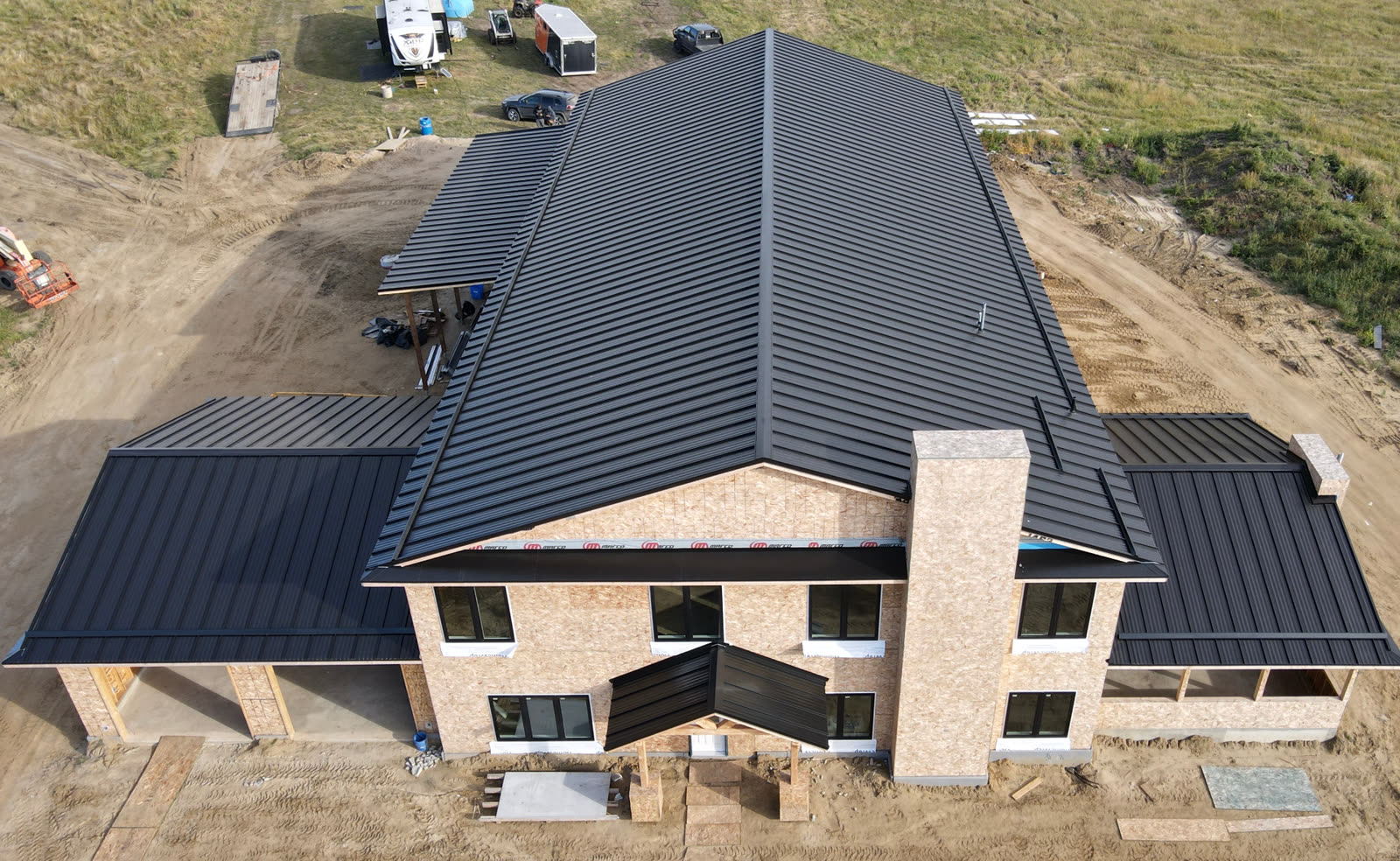
Aerial view — black standing seam metal roof on a large Prince Albert acreage home.
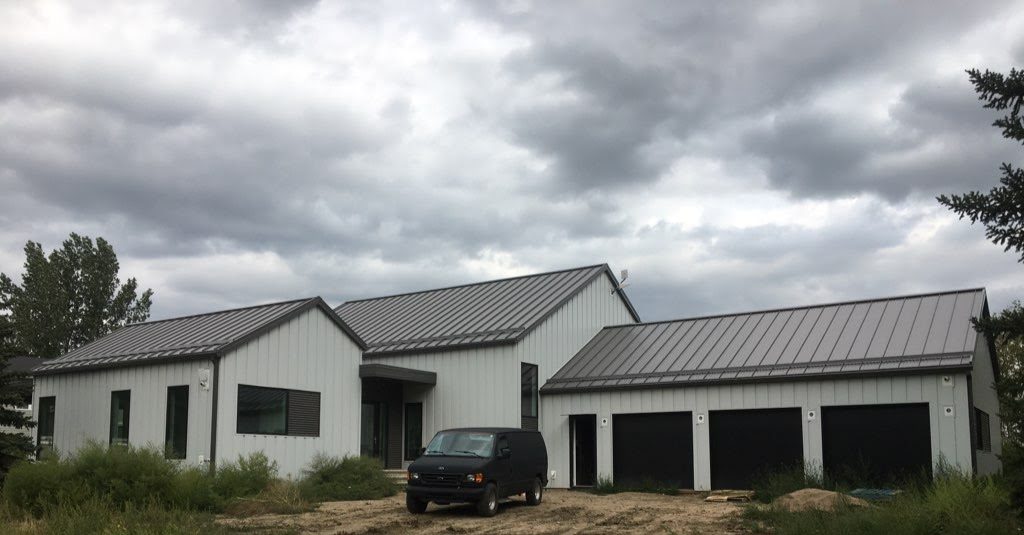
Front elevation — charcoal standing seam metal roof over light grey board-and-batten steel siding, RM of Saskatoon.
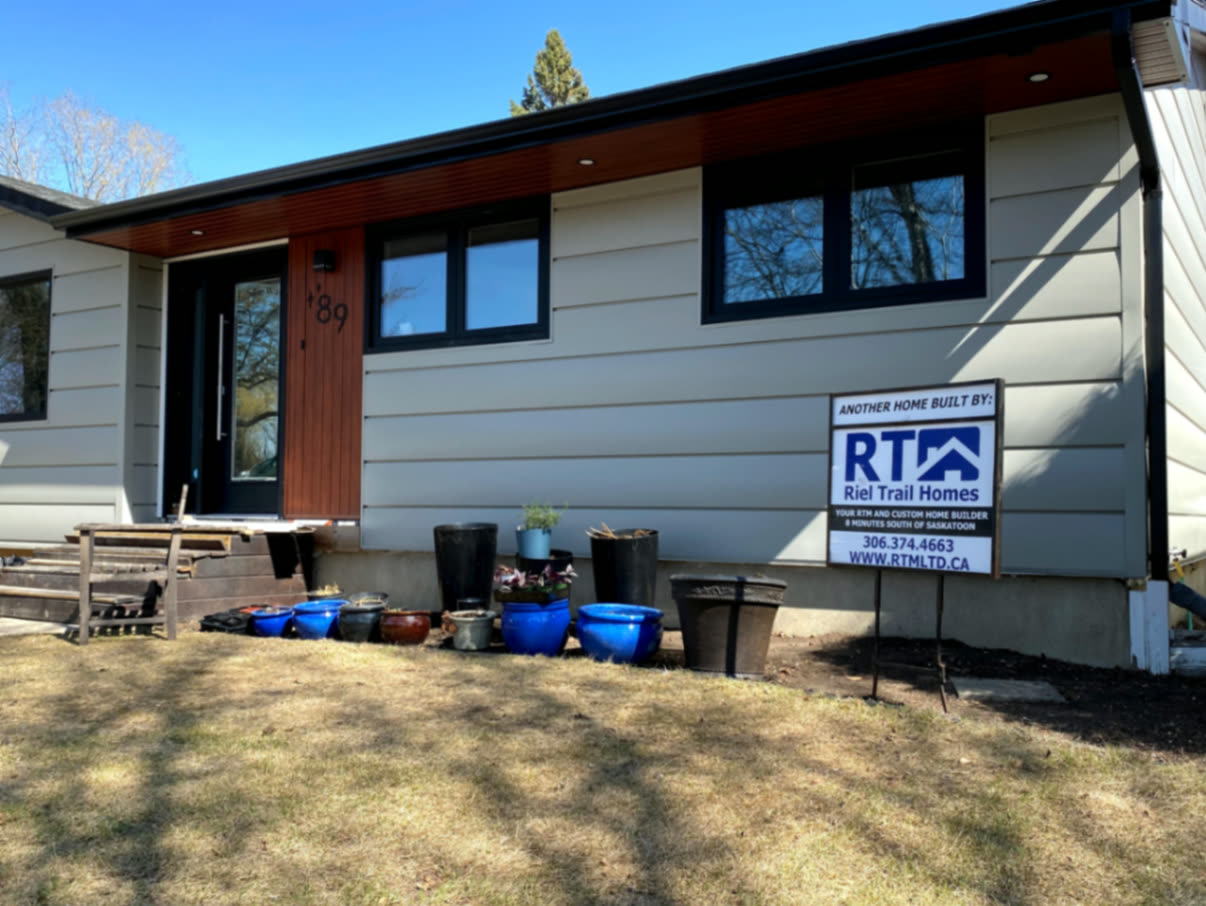
Street view — horizontal metal siding with warm woodgrain accent panels and black trim in Saskatoon.

Utility, commercial and community buildings

These are the building types where the exposed-fastener conversation comes up most — here, the owners chose concealed-clip panels because remote service calls cost more than the upgrade.

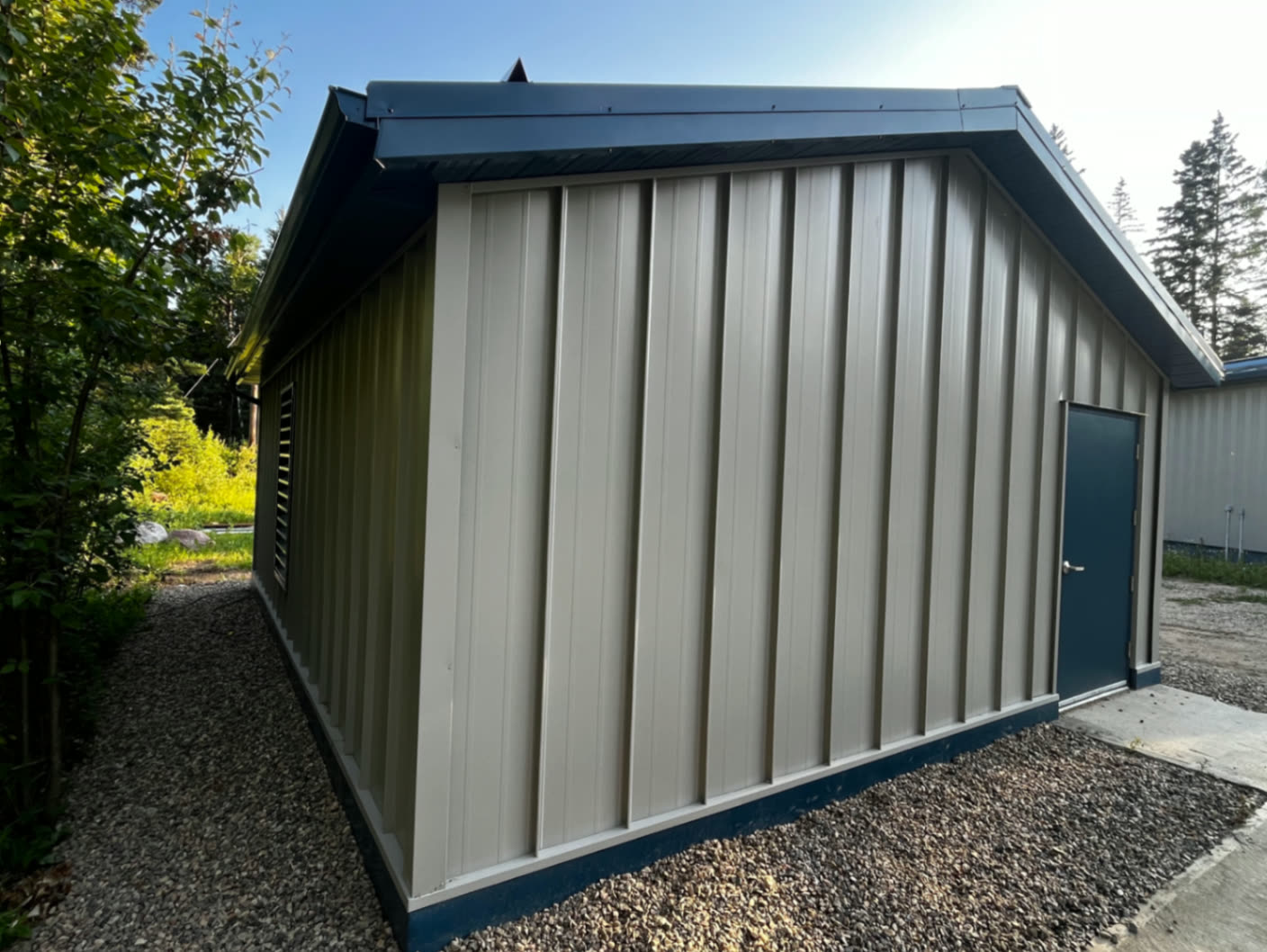
Side elevation — vertical metal siding with colour-matched fascia and trim.
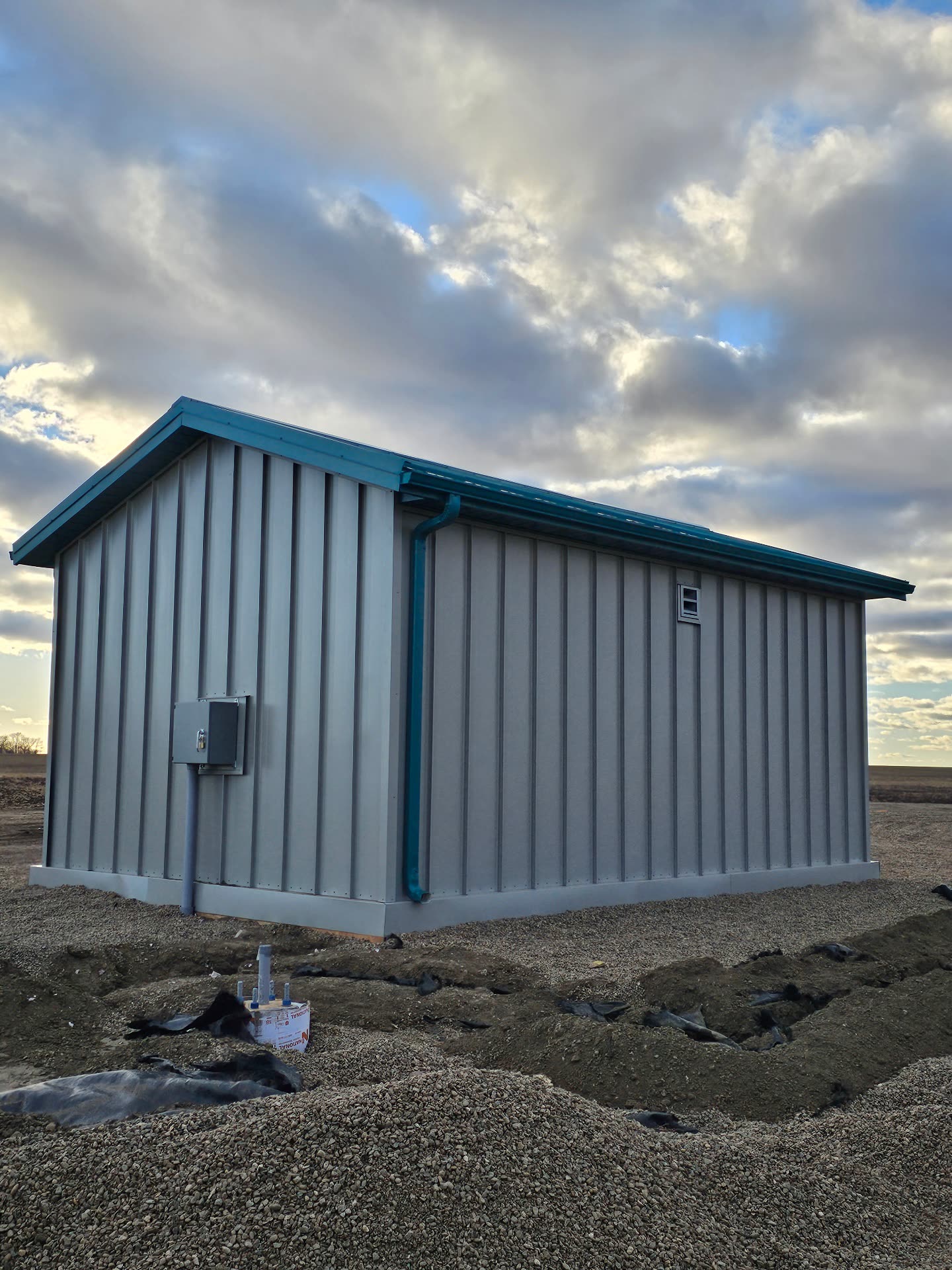
Side elevation — stone grey metal siding with green seamless eavestrough and downspout.
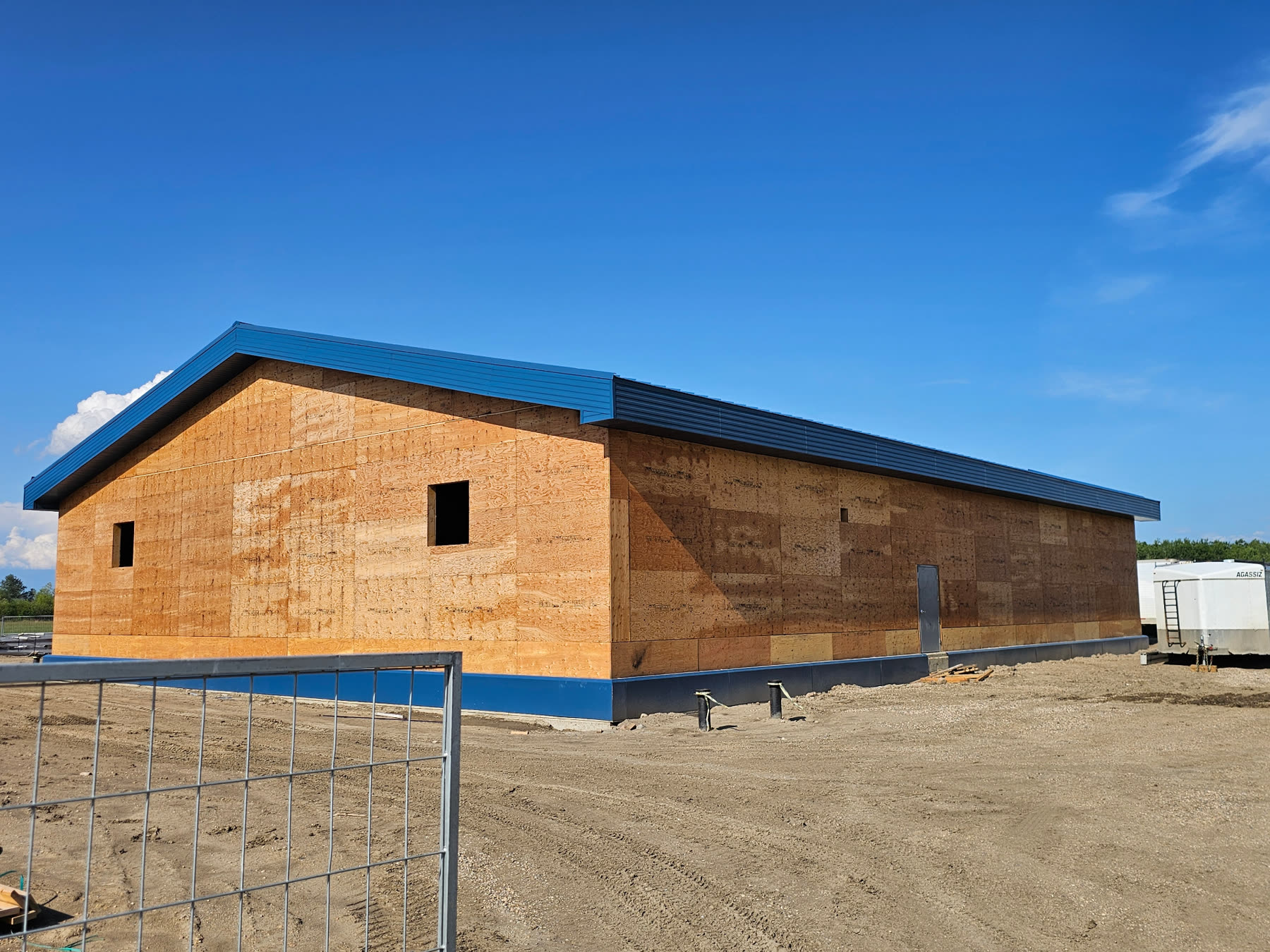
Rear gable view — long roof run with matching blue trim and deep overhangs.
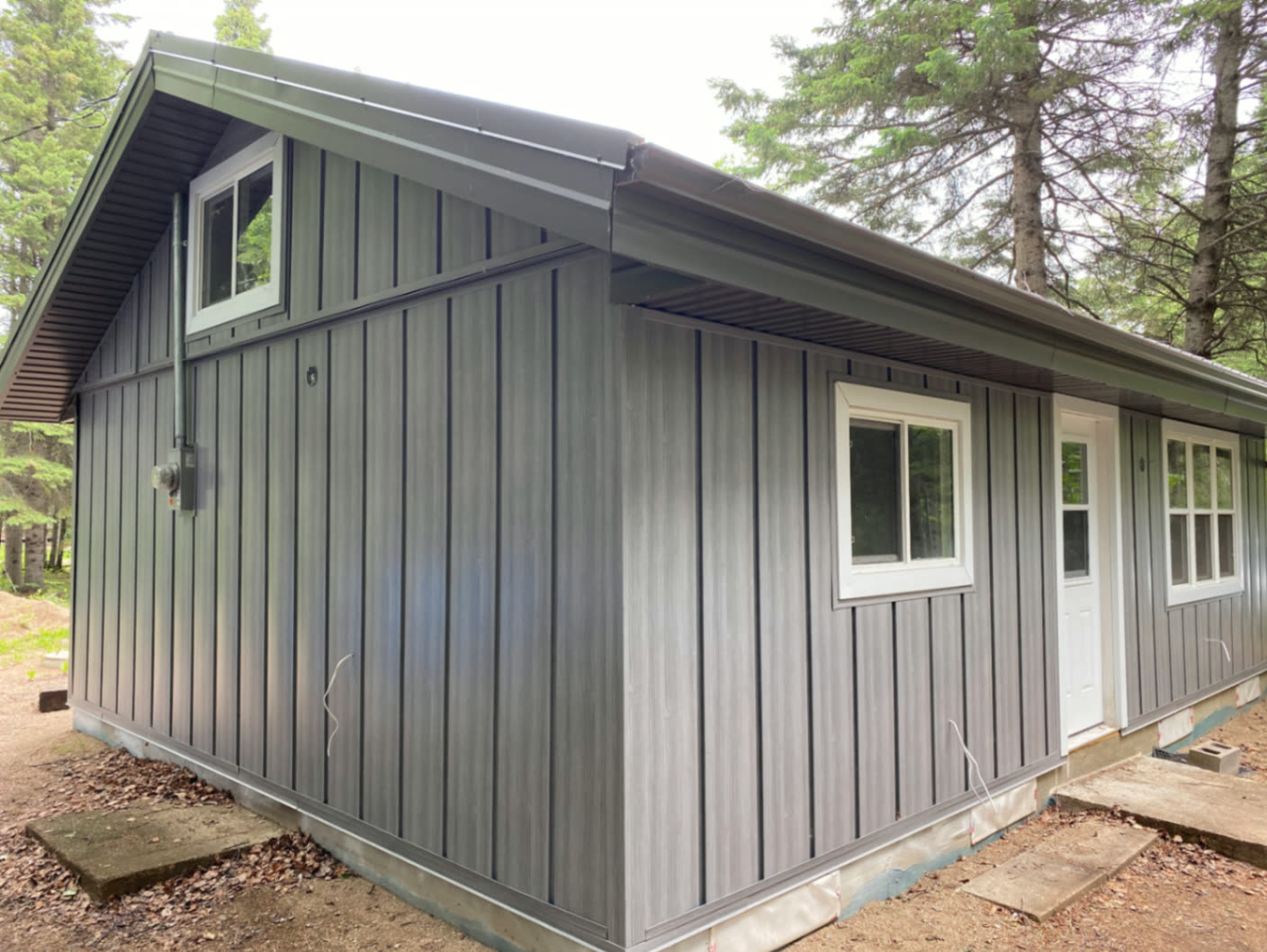
Front corner — vertical woodgrain-look metal siding with matching soffit, fascia, and eavestrough.

More work in the project gallery — or compare panel profiles on the standing seam product page.

What we recommend, by situation

Standing seam

Houses, cabins and anything you look at daily

On a home, the roof is a visual feature and a 50-year decision. Concealed clips mean no washers to fail and no screw dimples telegraphing across the panel. Every residential roof we roll on-site — Elk Ridge, Sarilia, Downtown Saskatoon heritage homes — is standing seam for this reason.

Standing seam

Low-slope, valleys, dormers and complex geometry

Anywhere water slows down or changes direction, exposed screws become the failure point. Standing seam handles low pitch and lets us form custom flashings that keep every penetration above the water line.

Standing seam

Solar-ready roofs

Solar clamps grip the seam directly — no holes drilled through the roof, no warranty argument later. If solar is a possibility in the next decade, this alone decides it.

Exposed fastener

Shops, barns, bins and utility buildings

For a heated shop or a machine shed on a simple gable, exposed-fastener panel is honest value. Plan on a screw inspection around year 12 and it will serve you well for decades.

Exposed fastener

Budget-constrained large spans

When you have thousands of square feet of simple roof plane and a fixed budget, exposed fastener covers more building per dollar. Spend the savings on better gauge and a premium paint system rather than a cheaper profile.

Standing seam

Sites you'll rarely get back to

Remote well sites, water treatment plants and infrastructure buildings pay for themselves in avoided service calls. Maintenance access costs more than the panel upgrade did.

Installer notes from the field

Details that decide whether either profile performs in a prairie climate.

  • Order fixed clips at the ridge and expansion clips down the field on any run over 30 feet — pinning both ends of a long panel is the number-one cause of oil canning and clip shear.
  • On exposed-fastener work, screw into the flat, never the rib, and set the driver clutch so the washer compresses without dishing the panel.
  • Use high-temp synthetic underlayment under either profile. Standard felt cooks under steel on a south-facing Saskatchewan slope.
  • Ice-and-water membrane at eaves, valleys and every penetration is not optional here — freeze-thaw drives water uphill under a roof.
  • Never mix an exposed-fastener roof with standing seam siding on the same elevation unless the trim is site-formed to match; factory trim leaves a visible mismatch.
  • Rolling panels on-site means exact ridge-to-eave lengths and no end laps — the biggest single leak reduction available on either profile.

Common questions

Is standing seam worth the extra cost over exposed fastener?
On a house, yes. Standing seam costs roughly 40–60% more installed but lasts 50+ years with no fastener maintenance, handles low slopes, and is solar-ready. On a simple shop or barn roof, exposed fastener is the better value.
How long do exposed-fastener screws last?
The neoprene washers typically need attention at 10–15 years. Screws can back out from thermal cycling and washers harden with UV exposure. Budget for a re-torque and washer replacement pass once during the roof's life.
Can exposed-fastener panels be used on a low-slope roof?
We don't recommend it below 3:12. Water moves slowly on a low pitch and every screw is a potential entry point. Standing seam with the correct seam profile is the right choice for low slopes.
Which profile is better for hail in Saskatchewan?
Both resist hail far better than asphalt. Heavier gauge matters more than profile, though standing seam has no exposed washers to be split by an impact, so it comes through severe storms with less to repair.
Can I put solar on an exposed-fastener metal roof?
Yes, but the racking must be through-bolted into structure, which means new penetrations. Standing seam allows clamp-on mounting with zero holes, which is why we steer solar-minded clients to seam.
More answers on the FAQ page, pricing in the Saskatchewan cost guide, and process detail in the replacement guide.

Still not sure which profile fits?

Send us the building type, roof pitch and rough square footage and we'll tell you straight — including when exposed fastener is the smarter spend.