How much does a metal roof cost in Saskatchewan?+
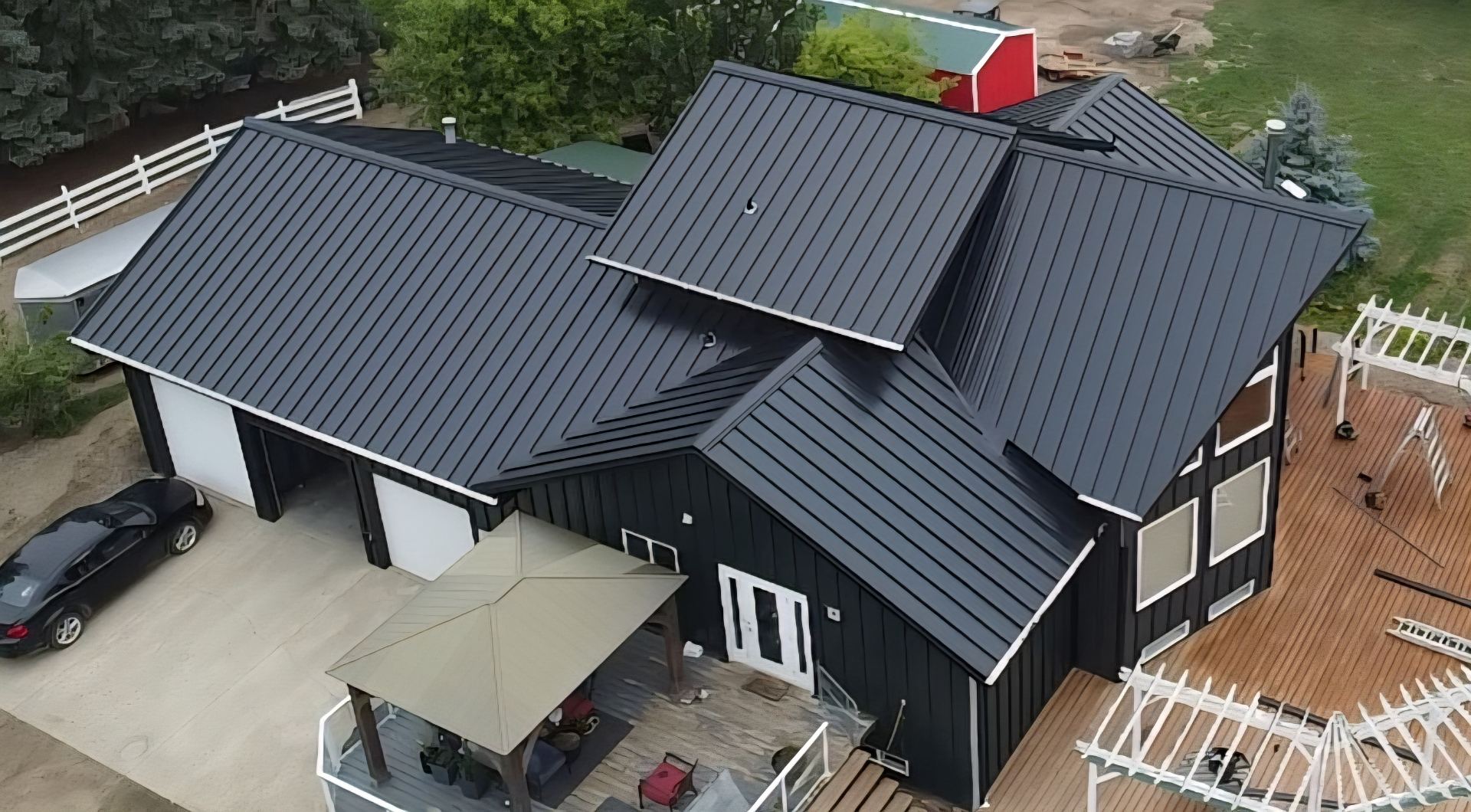
Standing seam run-off only (panel rolled on-site, no install) starts at $2.85/sq ft in 26 gauge and $3.15/sq ft in 24 gauge. Installed, 26 gauge standing seam averages $8.50–$18.00 per square foot and 24 gauge averages $9.00–$20.00 per square foot, depending on the difficulty of the roof, pitch, access to the site, and whether it's new construction or a renovation.
Is a metal roof worth the extra cost vs. asphalt shingles?+
Asphalt shingles start around $4.00 per square foot installed in Saskatchewan but typically need replacement every 15–20 years, so over a 50-year window you'd re-roof two to three times. A standing seam metal roof rolled on-site is engineered to last 50+ years with a 40-year paint warranty — one install. Beyond lifetime cost, metal reflects radiant heat instead of absorbing it into the attic (lower summer cooling bills), holds up to roughly 140 km/h winds where shingle tabs blow off, is Class 4 impact rated for hail, is non-combustible, and usually earns an insurance discount. It also adds resale value because a buyer isn't budgeting for the next re-roof.
Does a metal roof really save on energy?+
Yes, mostly in summer. Dark asphalt absorbs solar radiation and drives that heat into the attic — the shingle surface can sit 30–40°C above air temperature on a hot day. Painted steel reflects a large portion of that radiant energy back off the roof, so the attic runs cooler and your air conditioning cycles less. Lighter and cool-roof colours reflect the most. In winter the difference is minimal — your insulation, not the roof surface, does that work.
How does standing seam handle wind and hail compared to other roofs?+
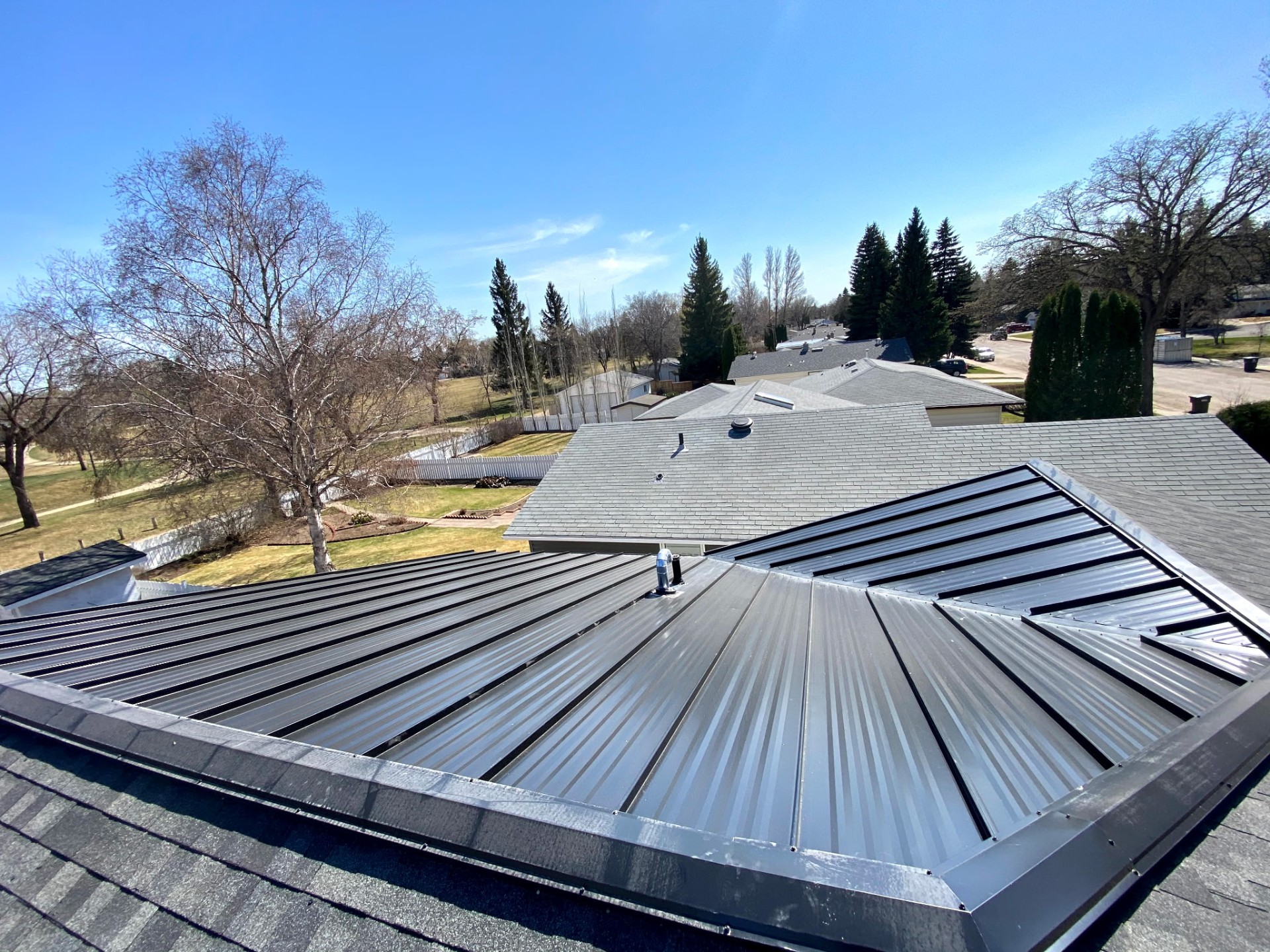
Standing seam is mechanically fastened with concealed clips and a locked seam, so there's no exposed tab or screw for wind to catch — properly installed it holds up to roughly 140 km/h. Shingles depend on an adhesive strip that fails with age and peels off in gusts. On hail, standing seam is Class 4 impact rated, and because our panel lies flat and tight to the deck it takes an impact far better than ribbed or corrugated metal, which has unsupported spans between ribs that flex and dent.
Will a metal roof increase my home's value?+
It generally does. A buyer looking at an aging shingle roof is quietly subtracting the cost of replacing it from your asking price. A new standing seam roof removes that entirely — it's a permanent, warrantied upgrade that appraisers, buyers, and insurers all recognize, and it's one of the exterior improvements that holds its value best at resale.
Can you mount solar panels on a standing seam metal roof?+
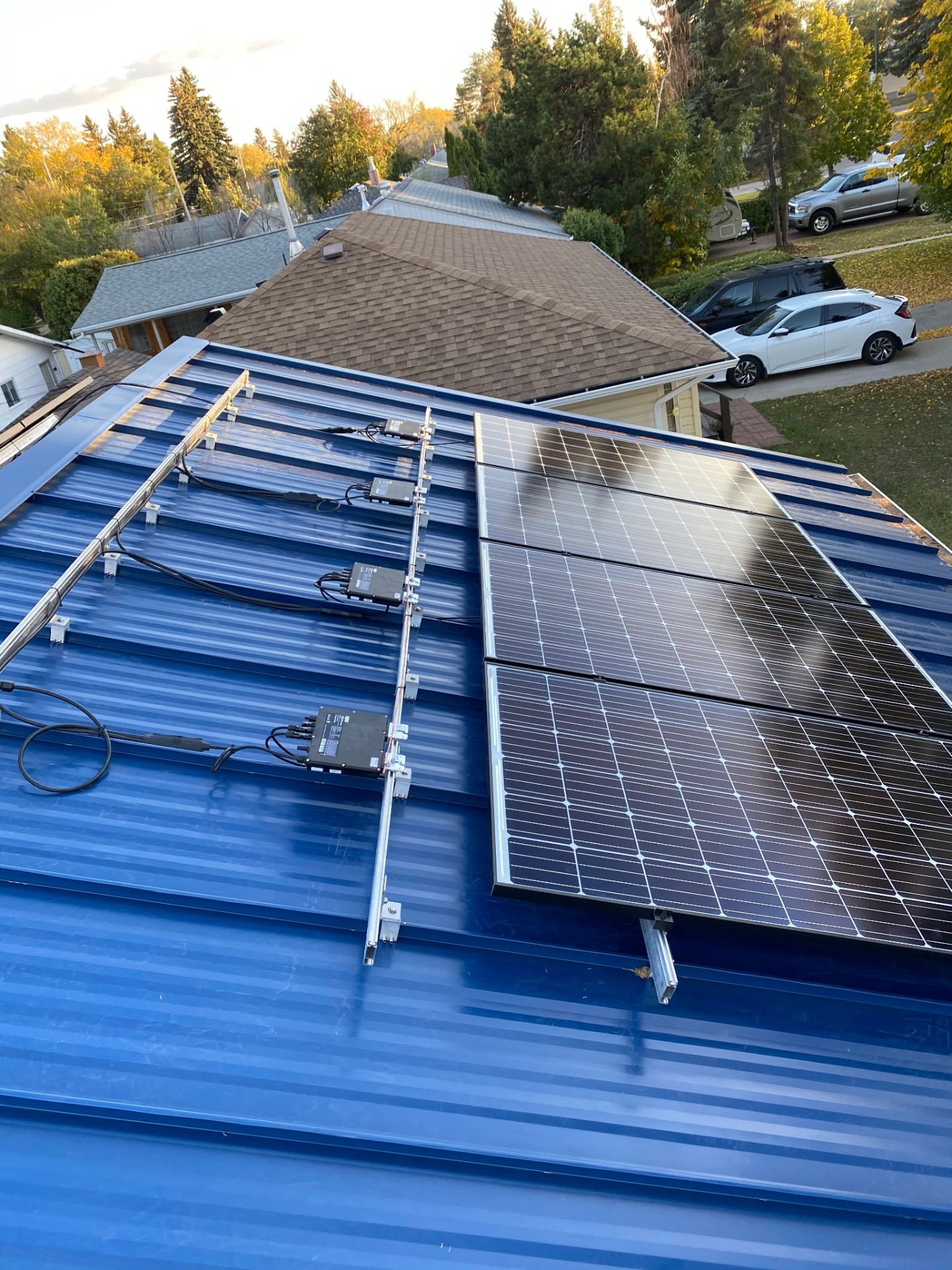
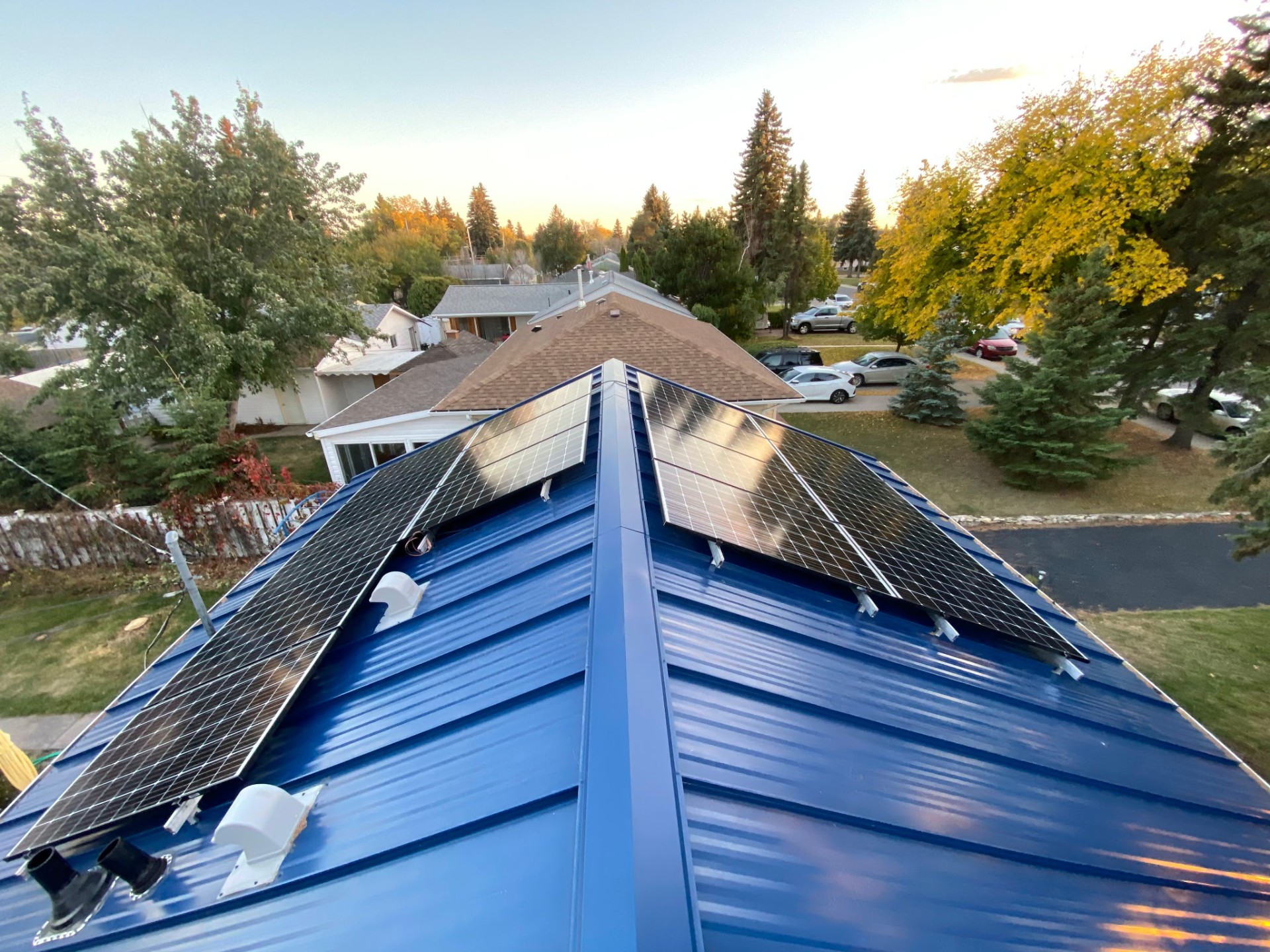
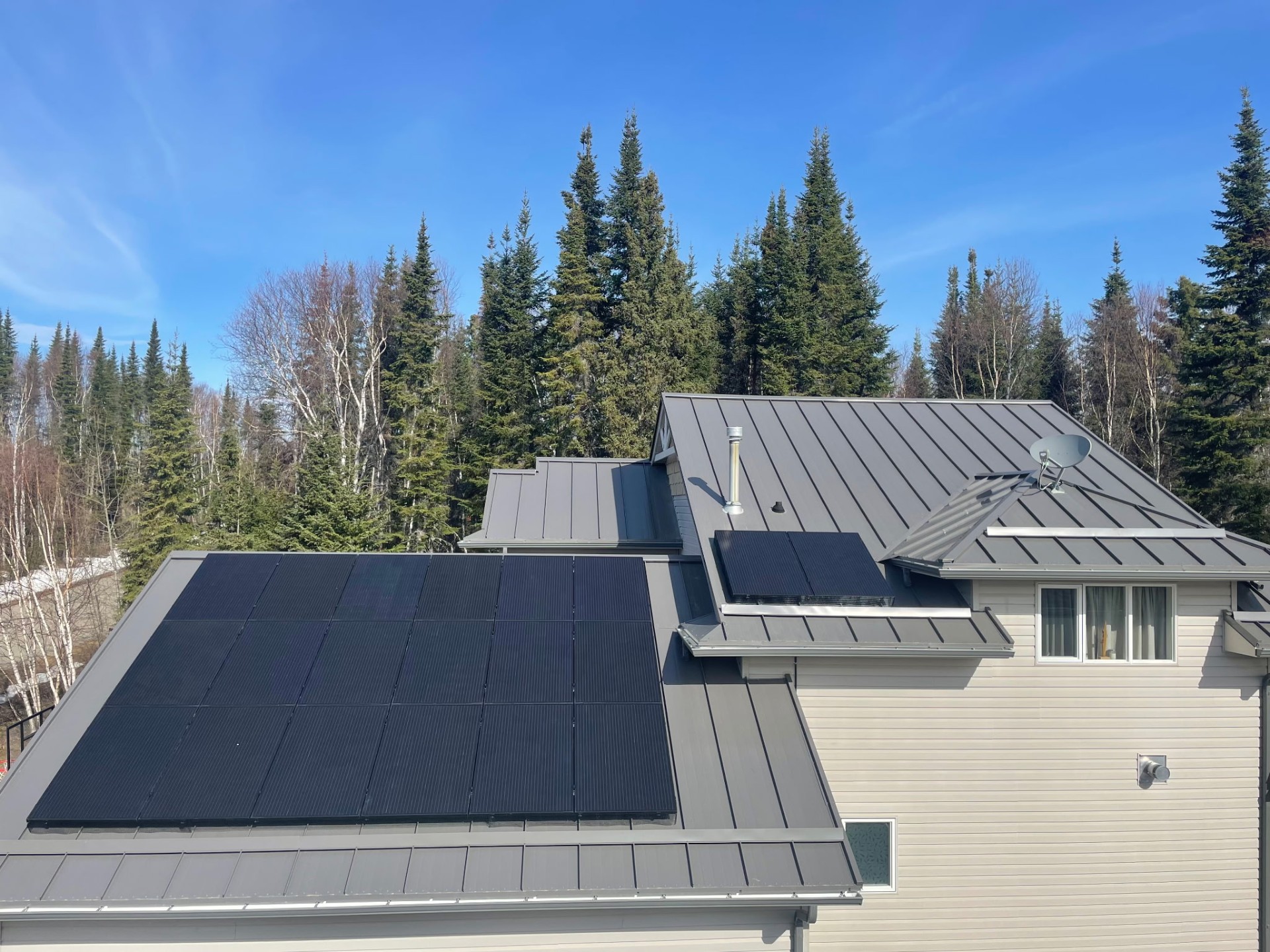
Standing seam is the best roof there is for solar. The racking attaches with non-penetrating seam clamps that grip the raised seam — no screws, no holes, no sealant through the roof membrane. That keeps your roof warranty intact and eliminates the leak points you get when solar is lag-bolted through a shingle roof into the rafters.
How much more does solar mounting cost on standing seam vs. shingles?+
The mounting hardware itself is a small premium — seam clamps typically run about $10–$20 each, so on a normal residential array you're looking at roughly $300–$800 more in hardware than shingle flashing feet. But installation labour is usually lower because there's no flashing, drilling, or sealing, so the installed cost often lands about the same or slightly less. The real difference shows up later: shingles need replacing every 15–20 years, and taking a solar array off and putting it back on costs roughly $3,000–$6,000 in removal and re-install labour every single time. A standing seam roof outlives the panels, so you pay that once — never.
What happens to my solar panels when a shingle roof needs replacing?+
Everything comes off. The panels, the racking, and the wiring all have to be dismounted and stored, the roof torn off and re-shingled, then the whole array re-installed and re-commissioned — typically $3,000–$6,000 on top of the re-roof, plus weeks of lost generation and the risk of damaging panels in the process. Solar panels last 25–30 years and shingles last 15–20, so it's guaranteed to happen at least once. With a 50-year standing seam roof, the panels reach end of life before the roof does.
Does mounting solar put holes in my roof?+
On standing seam, no. The racking clamps to the raised seam, so nothing penetrates the panel, the underlayment, or the deck — the roofing system stays exactly as sealed as the day we installed it. On every other roofing system, including shingles, tile, corrugated, and exposed-fastener metal, the mounts are lag-bolted through the roofing and into the deck and rafters. That's dozens of holes in your roof held watertight only by flashing and sealant, and sealant dries out, flashings shift with freeze-thaw, and bolts loosen as the deck moves. Those penetrations don't leak if — they leak when.
Can I put standing seam on only part of my roof and keep shingles on the rest?+
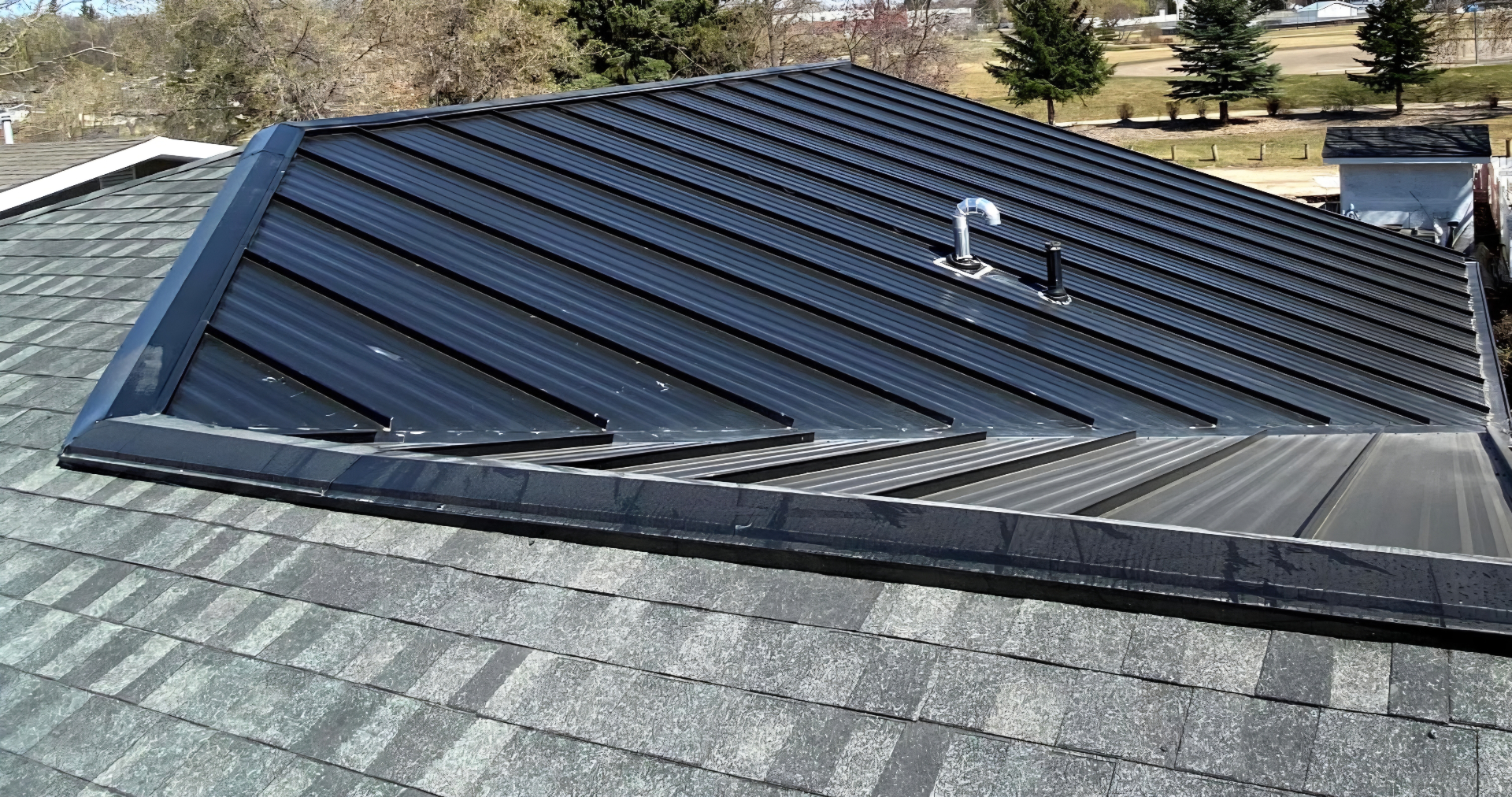
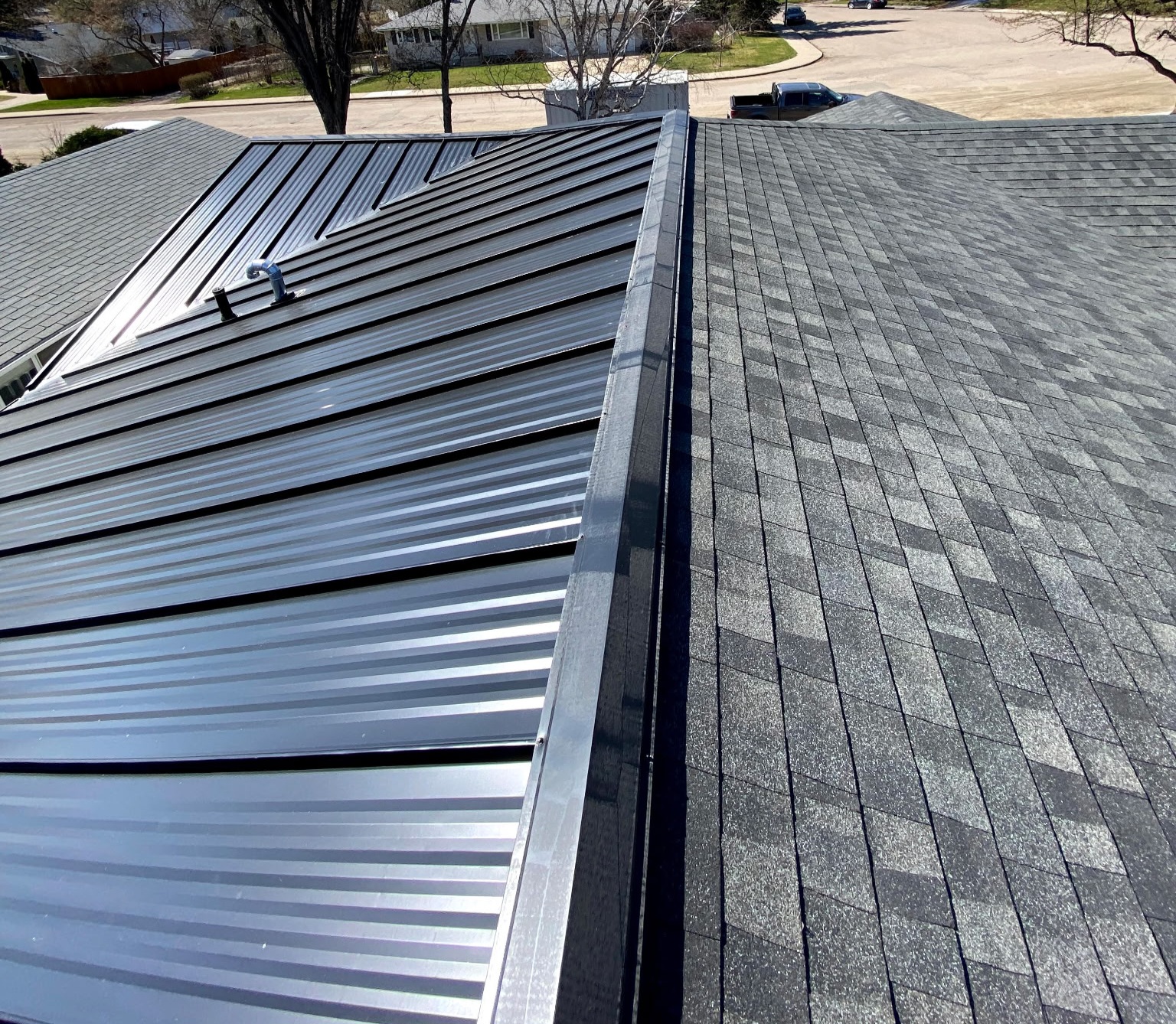
Yes — it's one of the most practical ways to go solar. We install standing seam on just the slope the array is going on, usually the south or west face, and leave the rest of the house in shingles if you prefer that look. The panels clamp to the seam with no penetrations, so that section never has to be re-roofed or de-mounted, and you only pay the metal premium on one or two planes. Where metal meets shingle at a ridge, valley, or wall we flash and close the transition properly and colour match the trim so it reads as a design line, not a patch.
What's the difference in price between standing seam and corrugated metal?+
Standing seam costs more — concealed fasteners, heavier gauge steel, and engineered clip systems all add labour and material. Corrugated (exposed fastener) is the cheapest metal option but every screw is a future leak point as the rubber washers dry out. We typically quote both so you can compare based on your budget and how long you plan to own the home.
Does on-site roll-forming change the price?+
It usually saves money on larger roofs. Shipping pre-cut panels from a distant plant adds freight costs, transport damage risk, and extra horizontal seams that have to be sealed on the roof. We bring our roll-former to your site and produce one continuous panel from ridge to eave — no shipping, no waste from short cuts, no extra seam-sealing labour.
What does a metal roofing quote usually include?+
A complete Sask Seamless quote covers tear-off and disposal of your existing roof (if applicable), underlayment, all metal panels rolled to length, ridge cap, eave and gable trim, fasteners or clips, snow stops if needed, and full installation by our insured crew. Seamless eavestrough, downspouts, and metal siding are quoted as separate line items so you can pick the scope that fits your budget.
Does roof pitch change the cost of a metal roof?+
Yes, but not the way most people expect. A low-slope roof is easier and faster to install — less labour, less safety equipment — but it needs a better quality underlayment because water and melting snow drain slowly and can back up under the panels. A steep roof is harder and slower to install, so labour goes up, but it sheds water and snow quickly, which means a standard underlayment is usually enough. The two costs often partly cancel each other out, so we price the actual roof rather than using a flat pitch surcharge.
Why do metal roof quotes vary so much from house to house?+
Because there are dozens of variables and almost none of them show up in a square-foot number. How easily we can get equipment to the roof, how many trees surround the house, whether the yard is open enough to stage 40-foot panels, how many layers of old shingles have to come off, what condition the deck is in underneath, whether scaffolding or a lift is needed, the pitch, the number of roof planes, dormers, chimneys, skylights, and valleys — every one of those moves the labour hours. That's why we quote the actual roof after seeing it rather than handing out a flat per-square-foot price.
Are there hidden costs I should plan for?+
We'd rather call them variables than hidden costs, because we put them on the written quote. The common ones: multiple layers of old shingles to tear off and dispose of, plywood or spaced-board decking that needs replacing once we open it up, scaffolding or a boom lift when the yard, trees, or a walkout basement block normal access, extra labour on steep or cut-up roofs, and premium PVDF paint over standard SMP. If something can only be confirmed after tear-off, we flag it as a contingency up front so there's no surprise invoice.
Will a new metal roof lower my home insurance?+
Often, yes. Most Class 4 impact-rated steel roofs qualify for a hail discount with Saskatchewan insurers — sometimes 10–25% off the roof portion of your premium. Ask your broker for the exact discount and we'll provide the spec sheet they need.
How do I get an exact price for my home?+
Send us your address, roof measurements, or blueprints through our quote form and we'll come back with a clear written quote — usually within 48 hours. Free site visits available across Saskatoon, Prince Albert, Melfort, Nipawin, and surrounding areas.